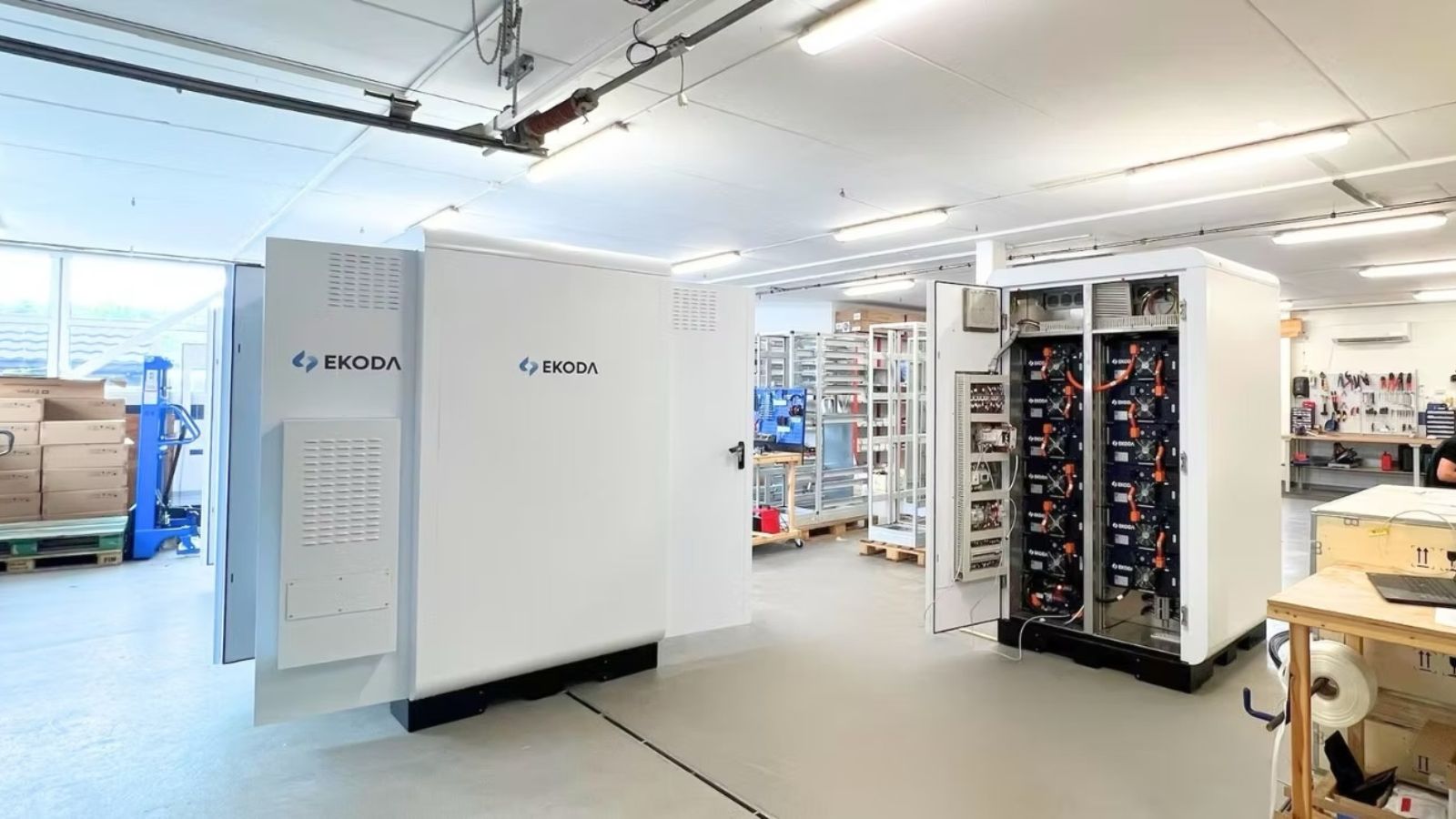
Ekoda is a Norwegian energy technology company designing, engineering and manufacturing battery energy storage systems (BESS) for industrial, commercial and mobile applications. Based in Austevoll, Norway, the company combines electrical engineering, system integration and in-house product development to create scalable energy storage solutions for an increasingly renewable energy system.
About Company
Ekoda AS was founded in 2023 by entrepreneur Daniel Tveit Haugland and operates from Torangsvåg in Austevoll, Norway. The company has its roots in a team with extensive experience in maritime and aquaculture installations, bringing practical knowledge of electrical systems and demanding operating environments into the development of modern energy storage technology.
The company specialises in Battery Energy Storage Systems designed to help businesses, infrastructure operators and energy projects manage electricity more effectively. Its solutions can be used for applications including peak shaving, renewable energy integration, backup power, grid support and zero-emission power supply.
A key part of Ekoda’s approach is maintaining control over the development and production process. The company designs and manufactures its battery storage systems in Norway, combining engineering, assembly, testing and system integration to create complete solutions rather than simply supplying individual battery components.
Ekoda has also been granted the right to use the official Made in Norway origin label for its Battery Energy Storage Systems, recognising the Norwegian development and manufacturing behind its products.
Products & Services
Ekoda produces both stationary and mobile Battery Energy Storage Systems, with systems designed to be configured around the requirements of individual projects.
Its stationary BESS products are designed for industrial and commercial applications where stored electricity can be used to reduce peak demand, support renewable generation, provide backup power or help stabilise energy supply. The systems can be integrated with solar PV, wind generation, local grid connections, generators and electric vehicle charging infrastructure.
The company’s mobile BESS products provide transportable energy storage for applications where temporary or flexible power is required. These systems can be deployed on construction sites, at events, for temporary infrastructure, remote charging applications and other locations where conventional grid connections may be limited.
Ekoda also offers custom energy storage solutions through its Ekoda CUSTOM range. These systems are engineered around individual project requirements, with stated capacities ranging from 10 kWh to 10 MWh depending on the application. Enclosure construction, dimensions, voltage, power output and other characteristics can be specified according to the project.
Alongside its products, Ekoda provides installation, commissioning, technical support, maintenance, optimisation and troubleshooting services. Its engineering team supports customers from initial planning through to long-term operation.
Manufacturing Capabilities
Ekoda’s manufacturing approach brings product design, engineering and system integration together. The company states that its BESS solutions are designed and produced in Norway, allowing it to maintain control over quality, safety and the supply chain.
The company’s development process includes the design of custom components and battery systems specifically engineered to integrate with its BESS platforms. This approach allows Ekoda to configure systems around different power, capacity and operating requirements rather than relying solely on standardised installations.
One example of this development work is the company’s in-house designed BESS cabinet. Ekoda developed the cabinet over a six-month period before producing its first completed unit. The cabinet was built in Norway using stainless steel and sustainable green aluminium and was designed to withstand transportation and demanding weather conditions.
Ekoda’s battery technology includes different chemistries for different applications. Ekoda Endure uses Lithium Iron Phosphate (LFP) chemistry, selected for its cycle life, thermal stability and long-term efficiency. The system is aimed at applications such as renewable energy integration, backup power, off-grid operation and peak shaving.
Ekoda Surge uses Nickel Manganese Cobalt (NMC) chemistry and is designed for higher-power applications requiring rapid charging and discharge. Ekoda states that Surge can provide discharge capability of up to 400 kW at 3C, making it suitable for applications including EV charging infrastructure and demand management.
Industries Served
Ekoda’s energy storage systems are designed for a wide range of industrial, commercial and infrastructure applications.
The company’s stationary systems can support manufacturing and industrial facilities, commercial buildings, renewable energy projects, charging infrastructure and other operations where electricity demand needs to be managed efficiently.
Mobile systems extend these applications into areas such as construction, events, temporary infrastructure and remote operations, where clean and flexible power can reduce the need for diesel generators or costly grid upgrades.
Ekoda’s experience also connects its energy storage expertise with the maritime and aquaculture sectors. Its background in these industries provides experience of electrical systems operating in challenging environments, while its battery technology can be applied to projects requiring reliable and resilient energy storage.
Engineering & Innovation
Electrical engineering sits at the centre of Ekoda’s approach to energy storage. The company designs and integrates electrical systems covering areas such as switchgear, protection, converters and control systems, with safety, redundancy and efficiency forming important parts of the engineering process.
The company’s systems can incorporate intelligent energy management and remote monitoring, allowing operators to track performance and optimise energy use. Modular designs also allow systems to be expanded as energy requirements change.
Ekoda has already delivered projects internationally. One project in Bulgaria combines renewable generation with an EkoDynamic 1,001 kWh / 700 kW BESS to support renewable-powered EV charging. Another Norwegian project uses a 1,716 kWh / 250 kW BESS alongside solar generation at an energy-positive building.
In the Netherlands, Ekoda supplied two 286 kWh / 125 kW Endure systems using second-life batteries, demonstrating how battery storage can also support more circular approaches to energy technology. The project enables greater use of solar power and reduces reliance on the grid for a horticultural operation.
Norwegian Manufacturing & Sustainability
Sustainability is a central part of Ekoda’s manufacturing strategy. The company states that it prioritises European suppliers and, where possible, locally produced components to reduce the environmental impact associated with long-distance transportation.
Its BESS cabinets are manufactured by a Norwegian company with more than 40 years of experience producing custom electrical cabinets, with the aluminium sourced from Hydro. Ekoda has highlighted the use of lower-carbon aluminium as part of its efforts to reduce the environmental impact of its products.
The company’s wider objective is to support the transition towards renewable energy by providing systems capable of storing electricity when it is available and supplying it when it is needed. Through stationary and mobile storage, Ekoda aims to help customers increase renewable energy use, reduce emissions and improve energy resilience.
From its base in Austevoll, Ekoda is developing a distinctly Norwegian approach to battery energy storage — combining local engineering, manufacturing and system integration with technology designed for an international market.
Company Information
Location: Torangsvåg, Austevoll, Norway
Website: https://www.ekoda.no/